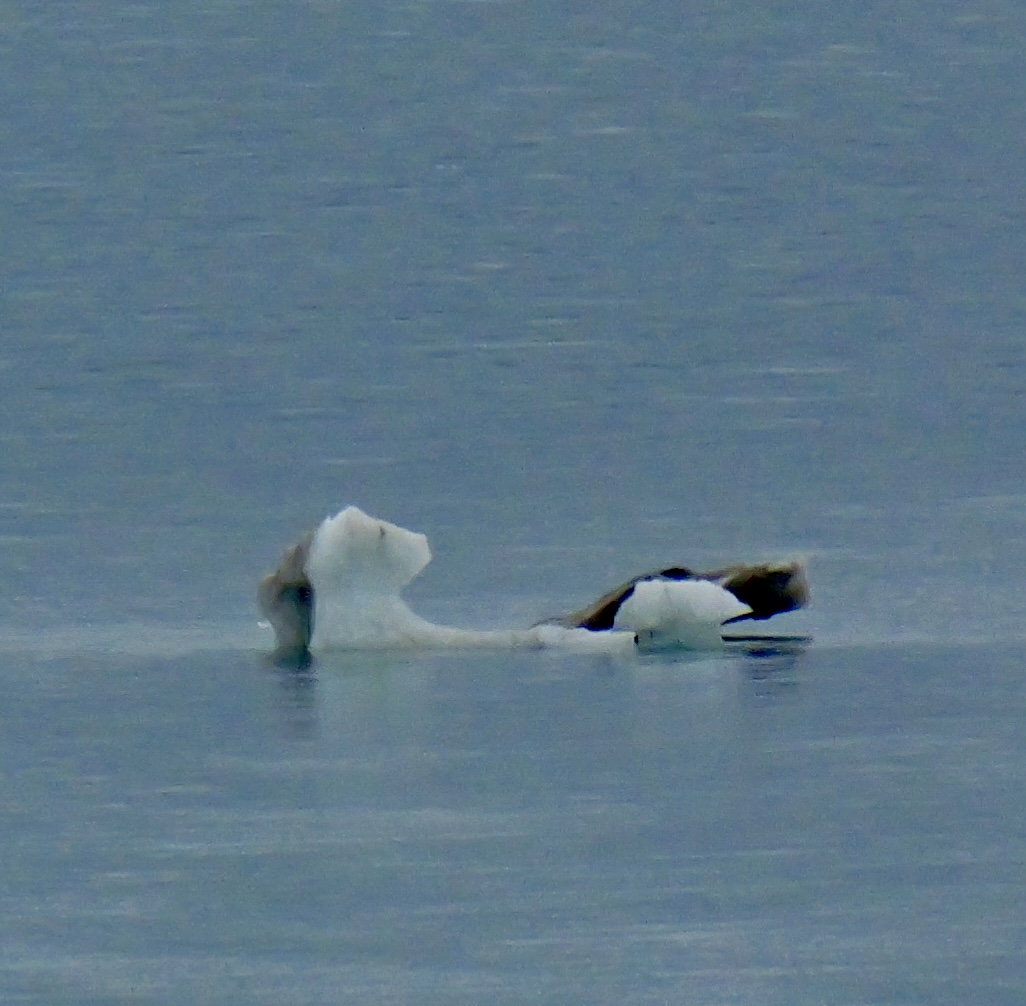
Doesn't this floating piece of ice look like a polar bear!?!
Glacier Bay National Park in Alaska covers 3.3 million acres.
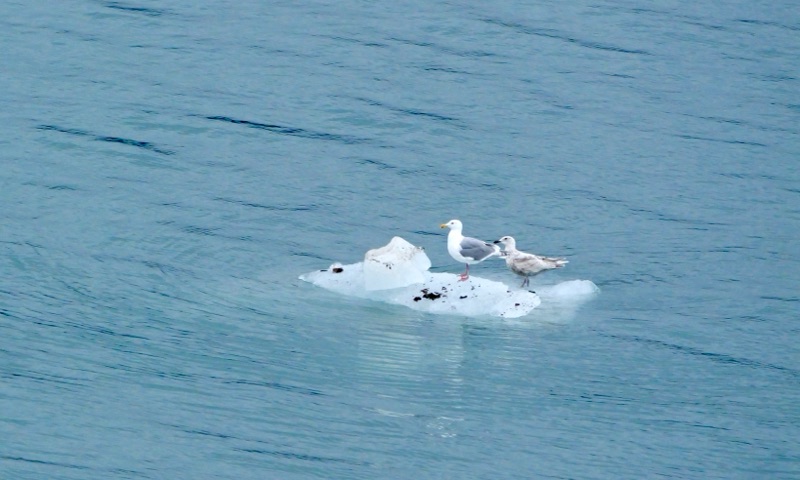
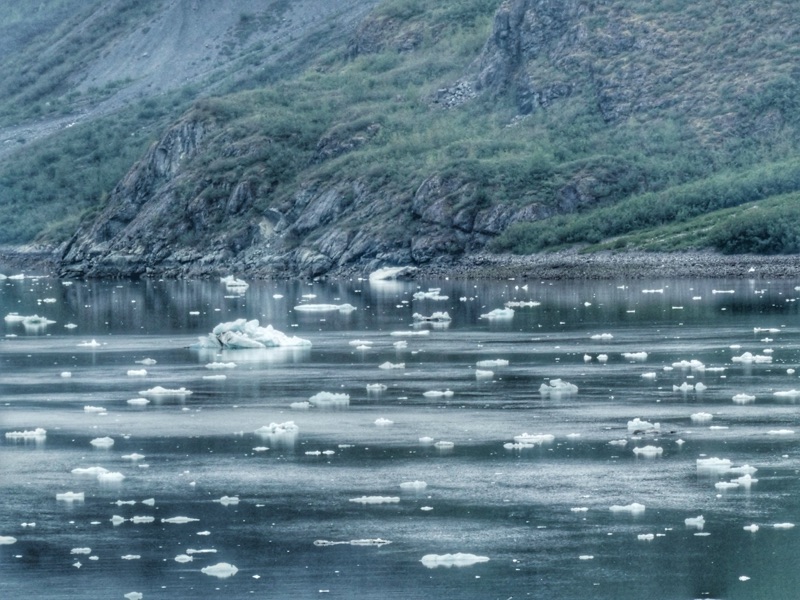
It is the home of over 1,000 glaciers, including famous tidewater giants like Margery and Grand Pacific Glaciers. Both of those we saw on our cruise through the National Park. When looking at photos of the glaciers it is hard to designate which ones are which! Tidal glaciers are massive walls of ice that meet the sea. They frequently "calve" (chunks of ice break off) crashing into the water with thunderous roars. We did not see or hear any calving when we were there. Some of the tidal glaciers no longer reach the sea and loose that blue/white color, as they pick up soot and other debris and look dirty. I think the Margery still is a tidal glaciers are, but the Grand Pacific may be the one we saw that no longer does and had a black look. There are chunks of very white ice floating in the bay as well as dirt streaked/black and white chunks.
Glacier Bay boasts the most rapid glacial retreat ever recorded. In just over 250 years ago, the entire bay was covered with a single colossal sheet of ice. As the ice melts, it leaves behind barren land, providing scientists a unique, textbook example of how plant and wild life change as ecosystems recover. At one time native Americans lived on land that is now Glacier that massive glacier moved advanced so rapidly that they had to quickly abandon the area and move. They were resilient and returned as the ice retreated and today claim Glacier Bay as their spiritual homeland. The Little Ice Age came and went quickly. 1750 the glacier reached to its maximum…Icy Strait (our next port of call). 45 years later it had melted back 5 miles into Glacier Bay which it had gouged out. By 1879, the glacier had retreated 40 more miles. And, for 2026, we had to travel 65 miles up the bay to view tidewater glaciers. And, our cruise ship took us into that bay to view them. So the bay is deep enough for large ships to navigate in as well as whales. So this isn't a shallow body of water…and, room for more than one cruise ship and smaller ships and boats to navigate in that body of water at the same time.
In this area at this time some glaciers are retreating; others are advancing unlike glaciers in some parts of the contiguous United States where glaciers could soon be a thing of the past. The glaciers in the Alaska area change according to amounts of snowfall, temperatures, etc. I had a sad feeling while viewing since I knew they were retreating…but we were told that the one we see today retreating might be advancing when next we visit! So I’m hopeful that they will not totally disappear.
There is so much history and geology to learn about in this region. Glacier Bay was first designated a National Monument in 1925 by President Calvin Coolidge. Then in 1980 President Jimmy Carter designated it as a National Park and Preserve. In 1986 it was designated a world biosphere reserve. And, UNESCO designated it as a world heritage site in 1992. So last year marked 100 years of the preservation of Glacier Bay!
Most visitors arrive to Glacier Bay via cruise ships and tour boats and over 90% never step foot on land in the park. That is how we visited. The cruise ship traveled the 65 miles in and gave us a 360° view of the area so wherever you were on the ship…you would get to see what was on the other side, too. Our balconies were our wonderful vantage points that day.
Glacier Bay is at the northern end of the largest temperate rainforest in the world, the Tongass. Summer temps average 50°-60°; winter 20°-30°. Some form of precipitation occurs on average 228 days per year. Annual precipitation is 70-80 inches (including an annual snowfall of 14 feet).
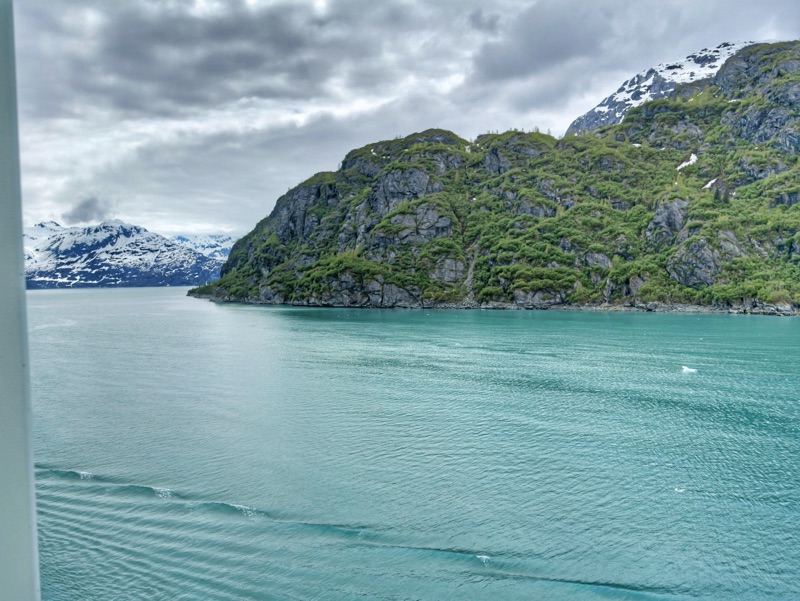
So much to learn about this magnificent area of God's world. But I will stop with these very few facts. It was a beautiful day at sea with some low hanging clouds at times…but blue sky breaking through at times. I liked having the beautiful clouds in the photos.
To be continued! Be safe! Be well! Be cautious!

No comments:
Post a Comment