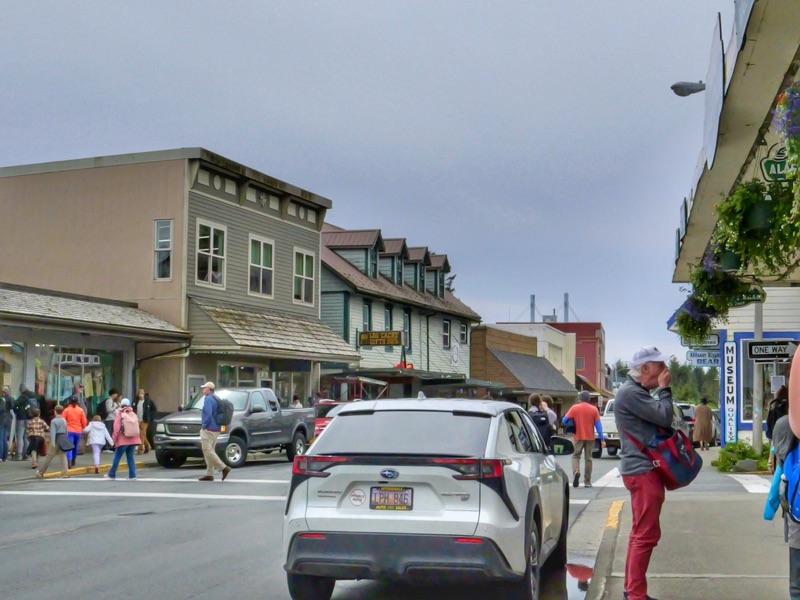
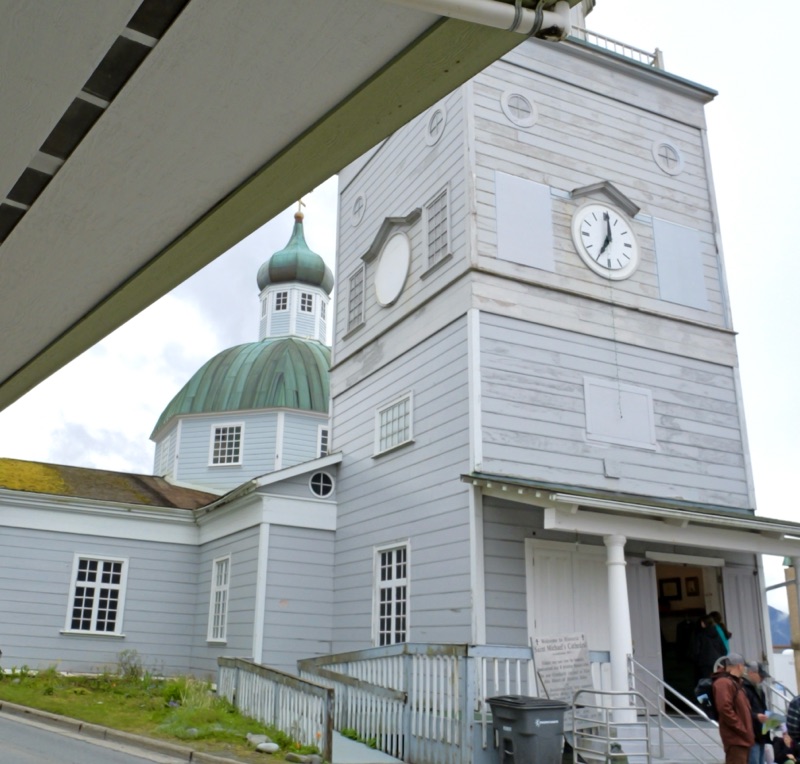
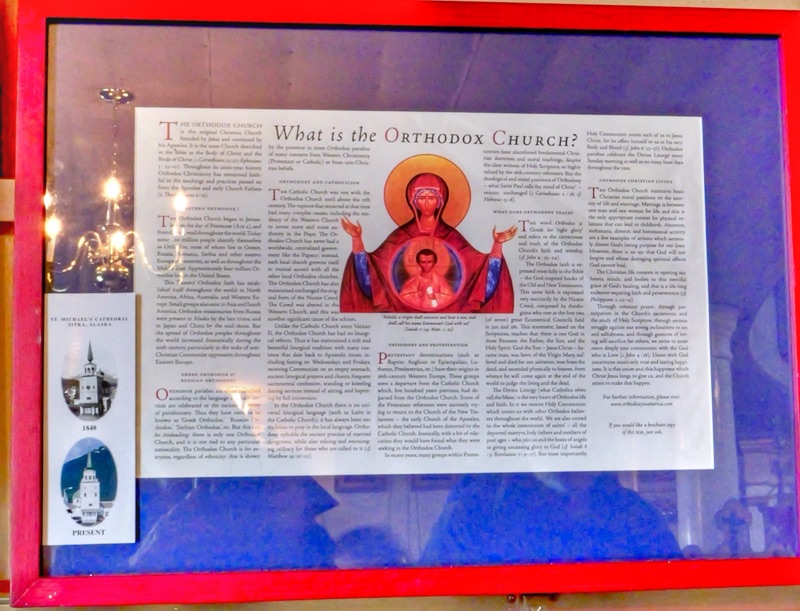
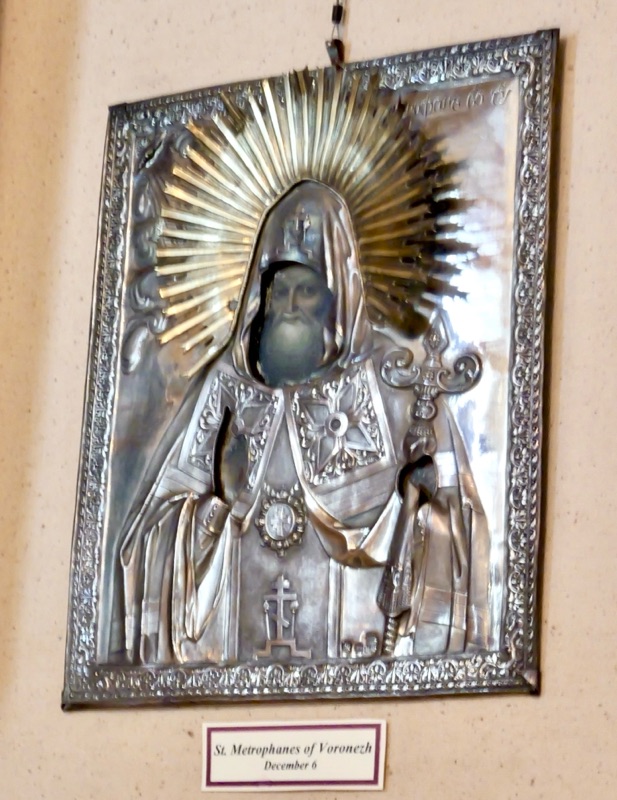
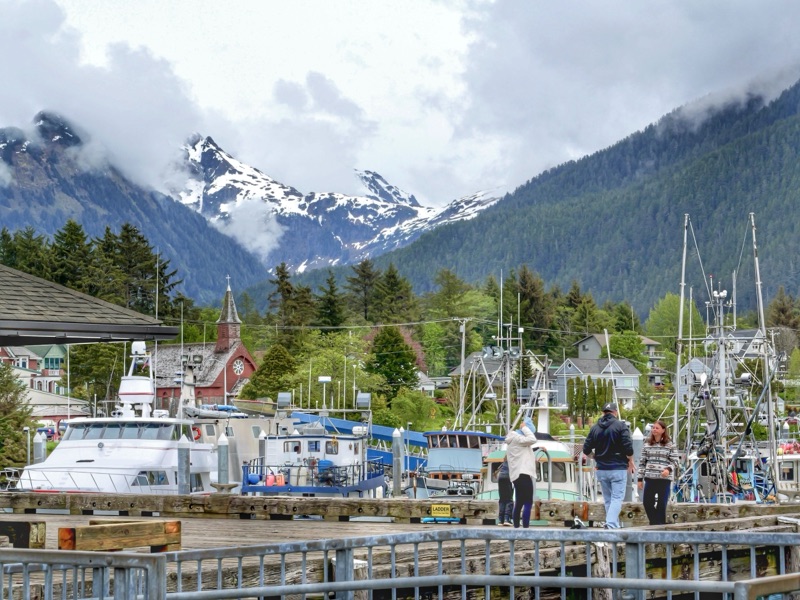
After finishing at the historical park, we loaded back on the bus and then had a decision to make. The bus driver drove us into the town of Sitka and from there we had the choice of getting off in the town and taking a shuttle back to the port or staying on the bus and going back to our ship. We chose to walk around the town of Sitka. St. Michael’s Cathedral is a Russian Orthodox Church was established by missionaries in 1848. It and the Russian Bishop's House chapel are filled with Orthodox icons. Below are a couple of photos that I took of the outside of the church. It was hard to get a photo that showed the onion dome that was a part of the structure and shows the Russian architectural influence in this structure.
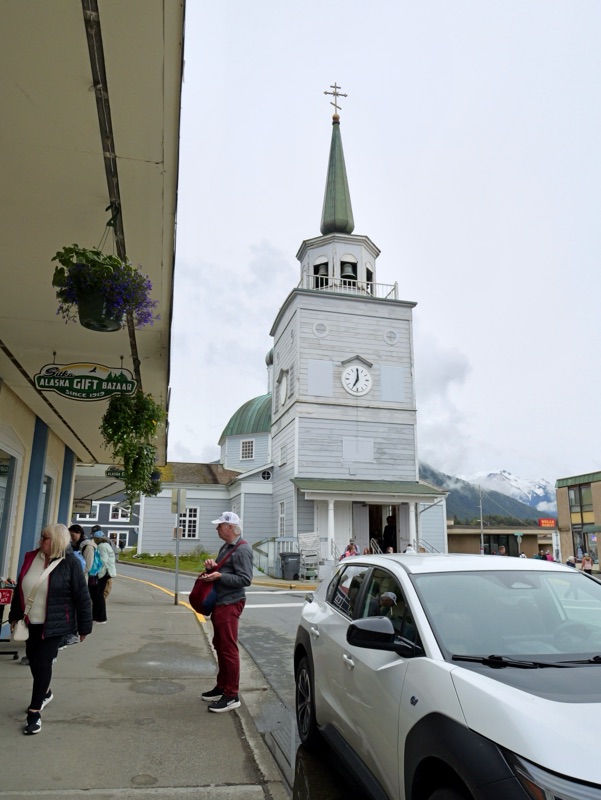
Next we walked up and down a street and found some souvenir stores, of which are in abundance in these small Alaskan tourist towns. My main souvenir interest for my Alaskan trip was to get a Christmas ornament to represent each port of call. I can report that that was an easy task to accomplish!
I will end Sitka's tale with some excerpts from the brochure that we were handed when we got off the ship in Sitka:
“Alaska was one of the last places in the Americas to be settled by Europeans. The Russian American Company took the lead…coming over from Siberia. It expanded its fur-trading operations via the Aleutian Islands to Alaska in the late 1700s.”
“When they tell the story of Sitka…
…thy remember a land of plenty and the people drawn to its wealth. The forest shrouding the land, the rivers running through it, and the sea around it provided everything needed to sustain a vigorous human community. The Tlingit had thrived on the island they called Shee for countless generations before ambitious traders came from the west in search of new goods. Here the Tlingit and Russians met, fought, and then uneasily consisted for a time. When the Russians departed after six decades, both groups had changed by the encounter. The Tlingit preserved their traditions, while the Americans who replaced the Russians wrought their own changes. In the 1960s after decades of acculturation and population decline, the Tlingit began to reassert their culture.”
What was pleasing for me to learn is that today the Tlingits and other Native American tribes are behind many of the cultural and learning programs and also are in charge of some of the excursions that one can take in the ports. One we went on…the whale watching and mammal excursion, which I will be telling you about in my ongoing tale of my Alaskan adventure!
To be continued! Be safe! Be well! Be cautious!

No comments:
Post a Comment