Friday, June 19, 2026

Port Day #3: Skagway, Alaska June 5, 2026

In Skagway we move into late 1800's gold rush history.  Skagway was the northern most point that we traveled on our Alaska cruise.  It's a unique town.  We headed off at the start of the day to peruse the town and then headed back to the ship for lunch and then a trip on the White Pass and Yukon Narrow Gauge Railroad which took us into Canada for a short time.

Here's some history that I copied about the gold rush:

The Klondike Gold Rush took place between 1896 and 1899, with the peak of the stampede and most intense mining activity occurring during 1897 and 1898

The timeline unfolded as follows:

  • August 16, 1896: Gold was discovered on Rabbit Creek (later renamed Bonanza Creek) in the Yukon territory of northwestern Canada. 
  • July 1897: Word reached the outside world when steamships arrived in Seattle and San Francisco carrying miners with literal "tons of gold". 
  • 1897–1898: An estimated 100,000 prospectors, known as "stampeders," flooded the region. Many passed through outfitting hubs like Seattle, WA, and Skagway, AK. 
  • 1899: The stampede slowed by late 1898 as gold claims were depleted, and the rush officially ended in 1899 when a new gold strike was discovered in Nome, Alaska. 

Very few struck it rich in this gold rush and many did not make it due to the extreme conditions.  We were told that Canada made the rule that the prospectors had to bring in a specific list of supplies…these supplies weighed around two tons! Here's the list of supplies that I took a photo of on a display that was along Broadway in Skagway.


A memorial to the lost prospectors:


We enjoyed our walk along the main street in Skagway.  We stopped and checked out many of the tourist traps and other shops.  I once again found an ornament to represent Skagway in a Christmas shop.  We also discovered a needlework and quilting store.  Melany got an ornament to cross stitch to represent Skagway on her tree.  She finished stitching it just the other day.  She's better than I…so far I haven't picked up my cross stitch since getting home. I guess I’m still absorbing memories of our trip as I go through my photos. One of our stops was at a Tullahoma native's photo gallery.  We missed seeing him, as he hadn't come in yet for the day.  

In the afternoon we lined up to get on the White Pass and Yukon narrow gauge train for a 40 mile round trip.


We were in the first car behind the engine.  I will post below some facts that I copied from the internet about the railroad and then will post some of the photos that I took from inside the railroad car.  Melany braved going outside on the platform between cars…but I decided that it was best if I just sat in the car and once in a while moved to the other side to get photos.  

Interesting facts about the train that I copied:

 The White Pass & Yukon Route Railroad, running from Skagway, Alaska, to the Yukon, is a legendary "living time machine". Built in 1898 during the Klondike Gold Rush, it is incredibly special because it climbs nearly 3,000 feet in just 20 miles, tackling sheer cliffs, tumbling waterfalls, and precipitous gorges.”


"The White Pass & Yukon Route was designated an International Historic Civil Engineering Landmark in 1994. This is an honor shared by only 36 world civil engineering marvels such as the Eiffel Tower, Statue of Liberty and the Panama Canal. The WP&YR is recognized for the many difficult and hazardous obstacles that construction overcame: design challenges, granite mountains, steep grades, cliff hanging turns and unimaginable weather conditions. The courage and brave acts of the workers under the leadership of dedicated builders are recognized by this prestigious designation."


"The White Pass & Yukon Route climbs from sea level in Skagway to almost 3000 feet at the summit in just 20 miles and features steep grades of almost 3.9%. The tight curves of the White Pass called for a narrow gauge railroad. The rails were three feet apart on a 10-foot-wide road bed and meant lower construction costs."


The last photo from above has some interesting history that I just learned today when researching and getting photos ready for tonight's blog.


"George Buchanan was a successful businessman, a coal merchant in Detroit. During the Depression he decided to help boys to get out of town and see Alaska. Every summer from 1923 through the Depression, Mr. Buchanan and 50 or 60 boys journeyed across Canada to Vancouver, sailed up the coast to Skagway, spent several weeks touring Alaska, climbing glaciers, panning for gold.

Part of the deal was that their parents would donate 1/3 of the money ($81), George would donate 1/3 of the money and the boy would work selling items such as kitchen implements door to door to raise the remaining 1/3.

In the White Pass depot building there is a glass display which has one such kitchen gadget that was sold as part of the fund-raising.

On the rocks below the U.S. Customs Station at Clifton are the words “On to Alaska with Buchanan” which was their motto. In 1935, he agreed to take girls, the sisters of the boys who had gone, but he made them earn money by baking pies and darning socks also."


This sort of gives a summary of our day in Skagway…so much to absorb along with trying to capture it in photographs!


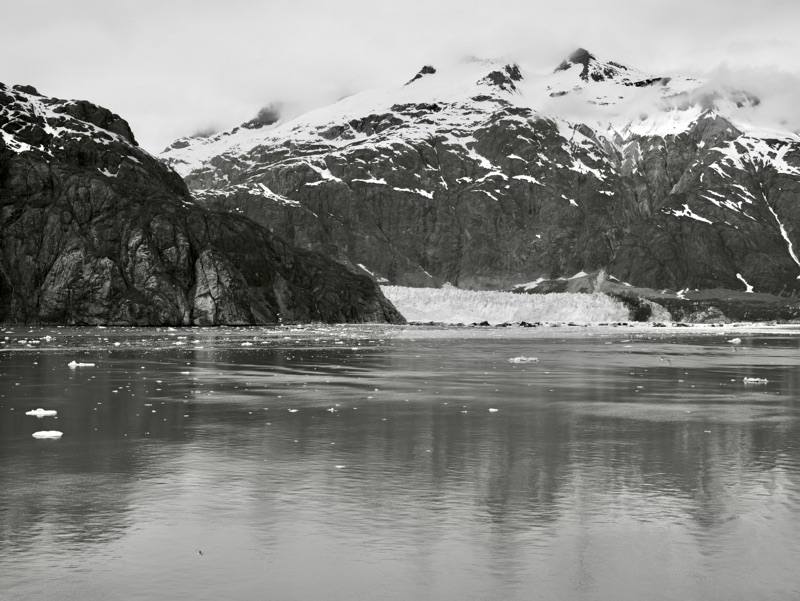
Tomorrow will be Glacier Bay National Park.


To be continued! Be safe! Be well! Be cautious!


Thursday, June 18, 2026

Sitka, AK Part 3

After finishing at the historical park, we loaded back on the bus and then had a decision to make.  The bus driver drove us into the town of Sitka and from there we had the choice of getting off in the town and taking a shuttle back to the port or staying on the bus and going back to our ship.  We chose to walk around the town of Sitka.  St. Michael’s Cathedral is a Russian Orthodox Church was established by missionaries in 1848. It and the Russian Bishop's House chapel are filled with Orthodox icons. Below are a couple of photos that I took of the outside of the church.  It was hard to get a photo that showed the onion dome that was a part of the structure and shows the Russian architectural influence in this structure. 


Next we walked up and down a street and found some souvenir stores, of which are in abundance in these small Alaskan tourist towns.  My main souvenir interest for my Alaskan trip was to get a Christmas ornament to represent each port of call.  I can report that that was an easy task to accomplish!  


I will end Sitka's tale with some excerpts from the brochure that we were handed when we got off the ship in Sitka:

“Alaska was one of the last places in the Americas to be settled by Europeans.  The Russian American Company took the lead…coming over from Siberia. It expanded its fur-trading operations via the Aleutian Islands to Alaska in the late 1700s.”

“When they tell the story of Sitka…

…thy remember a land of plenty and the people drawn to its wealth. The forest shrouding the land, the rivers running through it, and the sea around it provided everything needed to sustain a vigorous human community. The Tlingit had thrived on the island they called Shee for countless generations before ambitious traders came  from the west in search of new goods. Here the Tlingit and Russians met, fought, and then uneasily consisted for a time. When the Russians departed after six decades, both groups had changed by the encounter. The Tlingit preserved their traditions, while the Americans who replaced the Russians wrought their own changes. In the 1960s after decades of acculturation and population decline, the Tlingit began to reassert their culture.”

What was pleasing for me to learn is that today the Tlingits and other Native American tribes are behind many of the cultural and learning programs and also are in charge of some of the excursions that one can take in the ports.  One we went on…the whale watching and mammal excursion, which I will be telling you about in my ongoing tale of my Alaskan adventure!

To be continued! Be safe! Be well! Be cautious!
Wednesday, June 17, 2026

Sitka, AK Part 2


After the museum we headed to the Sitka National Historical Park. We gleaned all kinds of information about several Alaskan Native American Tribes, totem poles, and the Russian and Native American conflict. 

One fact that I learned about totem poles is that they were made intending that they would go back to nature and weren't meant to last through generations. Many totem poles today are replicas of those made years ago. 

The walk we took into the forested area was awe inspiring…quiet and peaceful…among the very tall Sitka Spruce and Western Hemlock.  The path that we took could have taken us to the place where the Native Americans and Russians battled over the land.  A place that the Native Americans chose to settle as it would be easier to defend themselves from both sea and land.  We did not make the whole walk, as I am not the fastest walker, and we had to be back at the bus at a specific time. So we walked a ways along the path and enjoyed quite a few different types of totem poles before we turned back to head for the bus.

Our next stop was the town of Sitka.  I’ll continue with that part of our tour tomorrow.  I’ll end with a neat picture that I took along the path before we got back to the bus.


To be continued! Be safe! Be well! Be cautious! 
Tuesday, June 16, 2026

An Open Door Policy?!?

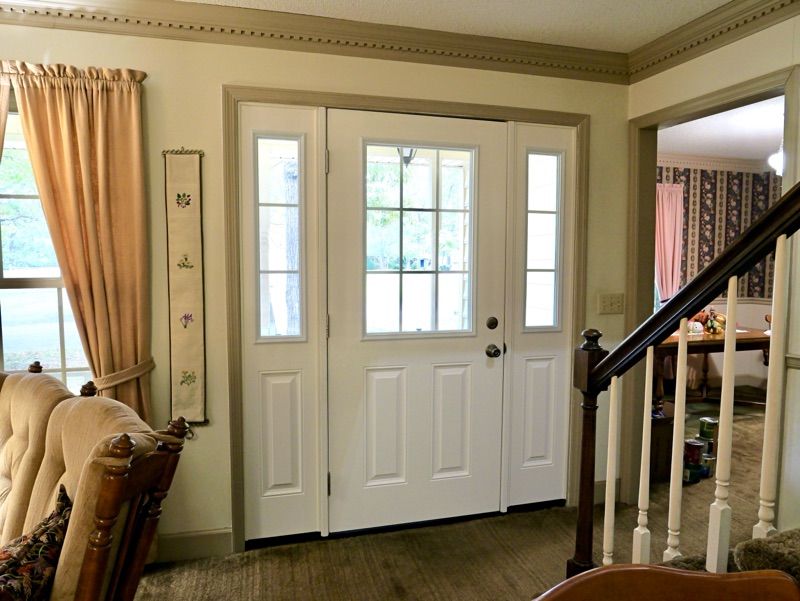
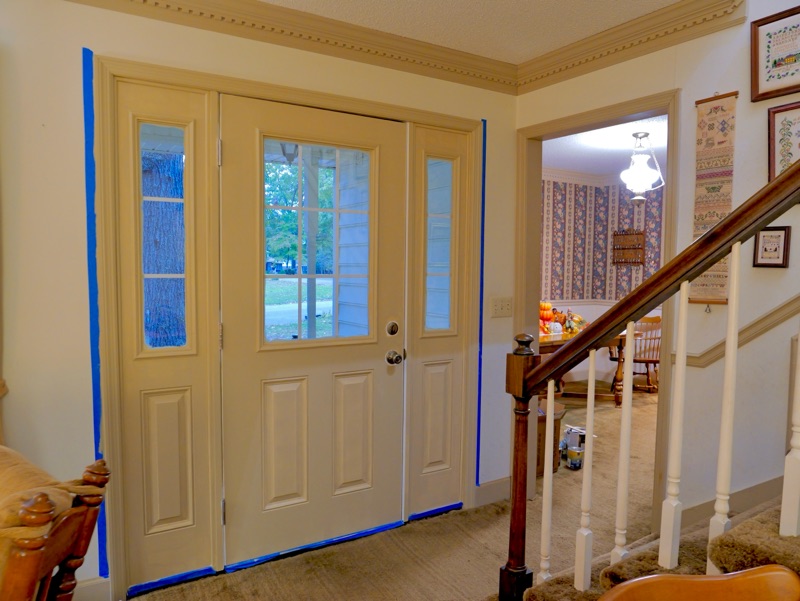
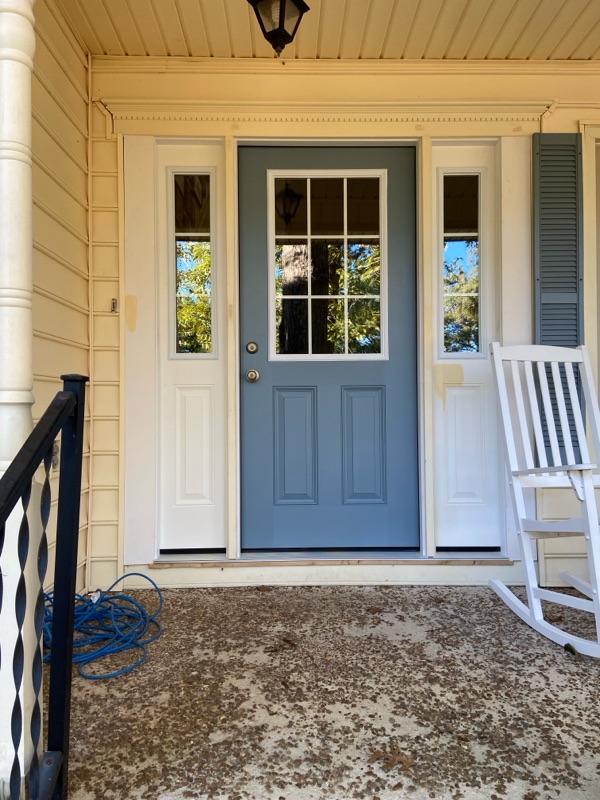
I’m going to skip Alaska for tonight and update you on what went on today.  I got my front door replaced!  At least the work has started, and, as you will see below, the new one is in place.  It took most of the afternoon.  Then this evening Nathan and I went to our new Ace Hardware store and got a doorknob and a deadbolt lock for it.  He just got those installed so I will be secure for tonight…more than I ever have been before, as I have not had a deadbolt lock on the front door.  Jacob and his dad worked hard and got it in place this aftrtnoon.  Now, I need to get the paint and Jacob will come back and paint it inside and out.  I’m glad to have that job done.  I have been wanting a new door for some time.  It will take some getting used to the glass in the door.  It surprised me when I come around the corner upstairs and start down the stairs and am able to see out!  

Not a lot else has happened today. I continue to work on my Alaska photos.  There are a lot of them.  I don't think that I have seen all of them yet.  I am pleased with what I got…brings back lots of memories of the trip as I go through them.  It was such a memory filled trip…one that I will look back on for the rest of my life!  I still can't believe that I actually went on a cruise to Alaska…never in my wildest dreams did I think I would go on a cruise…now have been on two…just this year!  And, never thought that I would get to the Last Frontier, Alaska!  But I pinched myself and I really did!

Today is the two year anniversary of Woody's death…in some ways it seems like much longer ago and in others it doesn't seem possible that it has been two years.

Woody's two year anniversary means that Abigail and Payton celebrated their 2nd anniversary yesterday. 

Happy anniversary to them!

And, now here is the installed front door. I am pleased with it. 


To be continued…more Alaska tomorrow night! Be safe! Be well! Be cautious!

Monday, June 15, 2026

Second Port City: Sitka, AK June 4, 2026, Part one

The excursion in Sitka started out on a bus that took us to the featured places: Alaska Raptor Center, Sheldon Jackson Museum, and Sitka National Historical Park.  

Sitka is known as the heart of the Russian influence in Alaska and once served as the capital of Russian America in the 18th century.  So this day's tour was about Russian influence, the Native people's of the area and their response to the Russian influx for fur trading, and about rescuing injured raptors…and seeing beautiful forested land.  

Our first stop was at the Raptor Center and we learned how they rehab birds to go back into the wild…or if they are injured too much then they take care of them in the center for the rest of the birds' lives.


This is an inside area that they use to get the birds ready to go back into the wild…they can relearn to fly after injuries, etc. There is screening on all of the viewing windows so the birds can not see the people looking in at them.


The golden eagle is the most formidable bird of prey in Alaska.  It is capable of hunting young Dali sheep and caribou. 

After the Raptor Center we made a stop that I didn't know was included in the tour.  It was at the Sheldon Jackson Museum.  This gentleman realized the importance of preserving the crafts of the Natives of the area and collected all sorts of memorabilia and it is on display in this fantastic little museum that is located on the campus of Sheldon Jackson College. It was purchased by the State of Alaska in 1984.  We got to see all kinds of Native American treasures in displays and even got to look in the drawers! It would be a fascinating place to spend hours in!  We only got a quick taste of all its treasures!


I’ll pick up with more of the Sitka excursion tomorrow!

To be continued! Be safe! Be well! Be cautious!
Sunday, June 14, 2026

Saturday, June 13, 2026

First Port City: Ketchikan, Alaska June 3, 2026

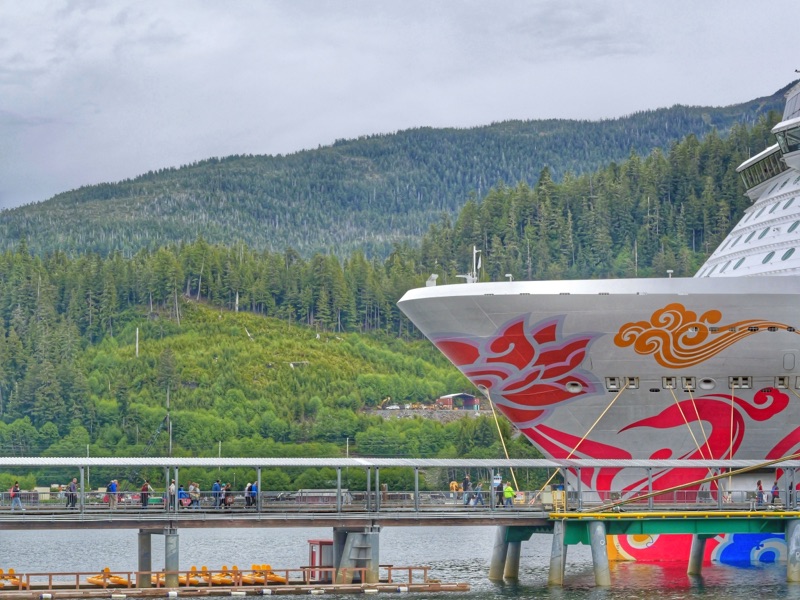
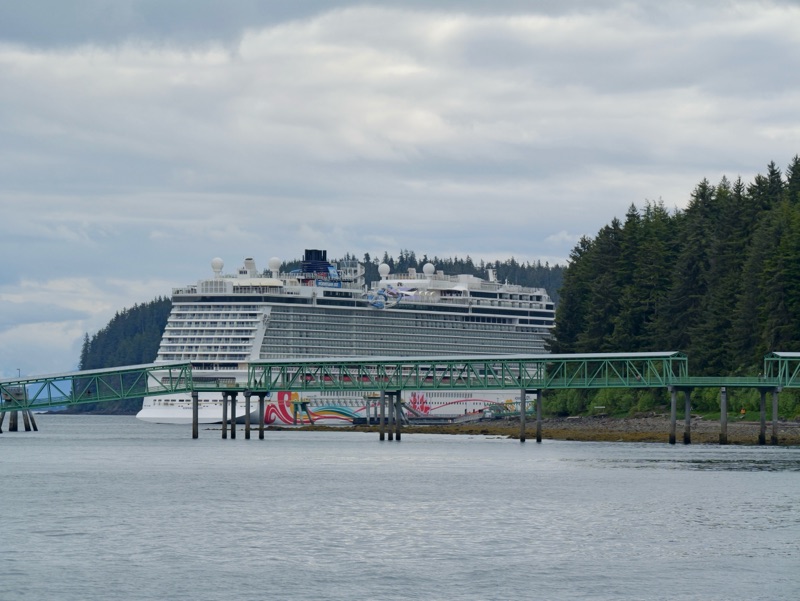
Here is our ship docked at Ward Cove Port.  Ward Cove, where we docked is part of the history of Ketchikan…part of the lumber industry that began in the 1800s with actual felling of trees directly into the water. Post-World War II, the Ward Cove Pulp Mill was going full steam providing pulp that was used globally for products like rayon, cellophane, and cosmetics. (We were told that it was even in our Wheaties Cereal at one time…fact or not…I do not know!) In the 90s they were forced to close due to changing political policies, reduced timber activity availability, and environmental regulations within the Tongass National Forest. That is when tourism took over and Ketchikan shifted its focus toward cruise-ship tourism.

Ketchikan is located on an island 679 miles north of Seattle, WA. It is Alaska's most southeastern city and its first port of call for northbound Alaska cruises.  It is known as the Salmon Capital of the World.  It also has the claim to fame of being the rainiest city in the contiguous and larger U.S. averaging 150” per year! We "almost" had a dry day, but it misted on us for a very short time near the first of our time on land. It does not snow very often there. They have a rain forest climate…record high is 89° and record low is -1°.  They are surrounded by the 17 million acre Tongass National Forest. 

Ketchikan has only about 32 miles of drivable road (we may have driven on most of that road. I'm not sure!) The speed limit is 40 mph.  No roads in or out…have to come and go by boat or plane.  Have to take a 5 minute ferry ride to another island to get to an airport.

Our excursion on this stop included an all you can eat crab feast. Mmmmmmmmm! Yum!  And, I managed to go through quite a bit of crab myself!  There was a challenge to have the highest crab shell stack.  You will see Wade's, Melany's and mine in the photos that follow. It was Dungeness crab. Soooooo good and messy! I didn't take many pictures as I didn't want to get my camera dirty…plus we were more interested in eating than photography!


Melany and I were dressed in our plaid shirts for the next part of the excursion…The Lumberjack Show. There was a glitch at the lodge where we are the crab…it was about a 40 minute or so drive back to the dock and the bus that dropped us off failed to return to get us.  So the lodge grabbed some vans and got us back in time for the lumberjack show.  

This show was about the late 1800s till the mid 1900s when they were still felling trees and various lumberjack camps would challenge each other to contests to see which camp was best.  We got to see various things that lumberjacks did in each of the challenges.  The teams we saw represented the U.S. and Canada.  U.S. won!  Here are some photos from that part of our excursion.  It was quite entertaining along with shedding insight into the lumber industry or old.


To be continued! Be safe! Be well! Be cautious!